

Louis Vuitton just put surf culture on the world's biggest stage.
Luxury brands have referenced surf culture for decades.
A capsule collection. A beach campaign. Maybe a branded surfboard that ends up hanging on someone’s wall instead of seeing the ocean.
But at its Spring/Summer 2027 menswear show, Louis Vuitton did something different.
It didn’t use surfing as an aesthetic.It used it as a worldview.
And in doing so, it delivered one of the clearest lessons in modern brand building: people don’t connect with isolated ideas—they connect with complete worlds.
Most Brands Think Branding Starts With the Product
When brands launch a campaign, the product is usually the hero.
The creative is built around it. The messaging explains it. The experience exists to support it.
Louis Vuitton flipped that thinking.
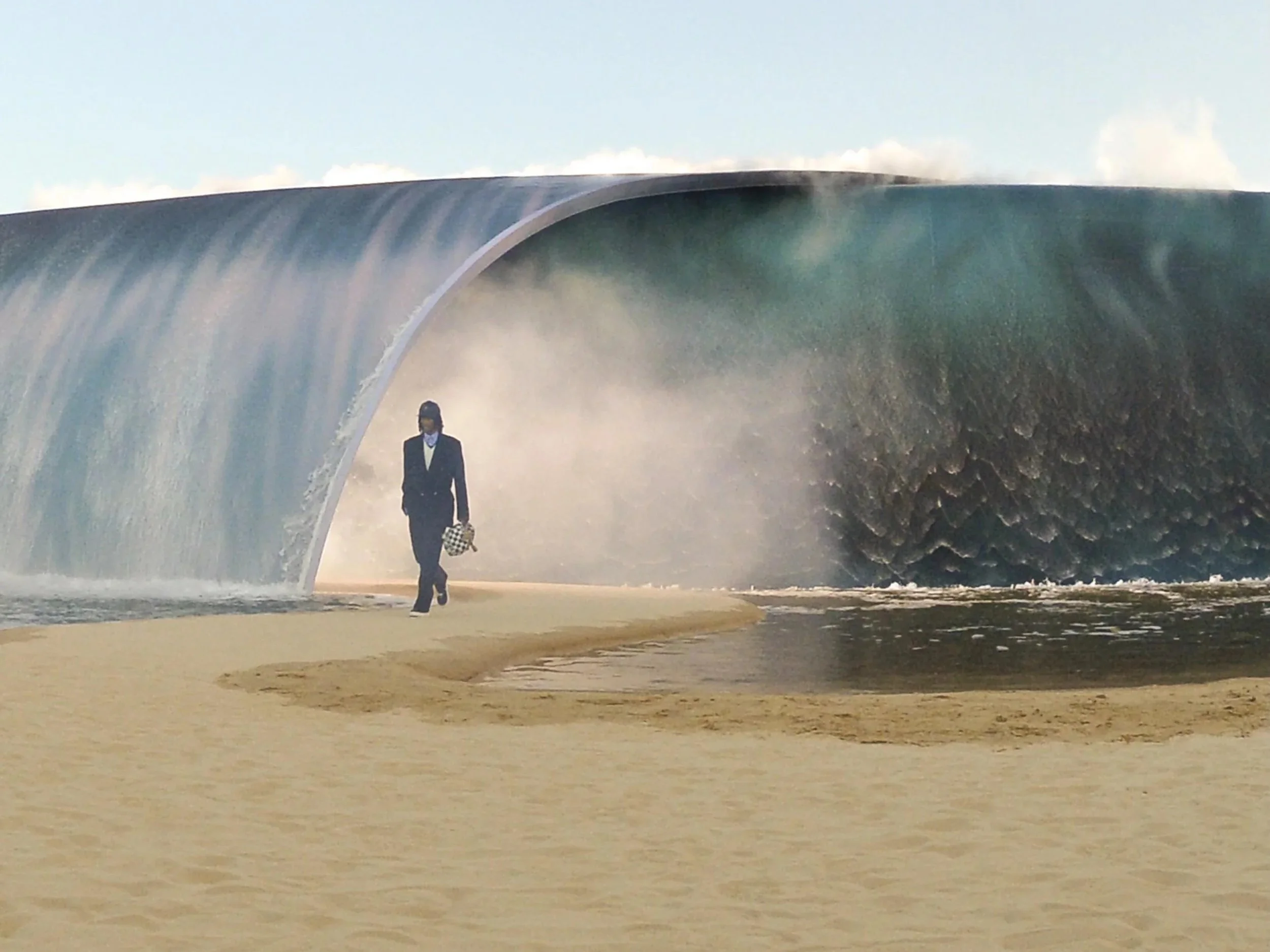
Before guests saw a single garment, they were already inside the story. They walked across sand. They felt mist from a towering wave. The entire space looked and felt like the coast rather than a Paris runway.
By the time the first model appeared, the audience already understood what the collection was about without anyone needing to explain it.
The environment became the narrative. The clothes simply belonged inside it.
That’s what great brands do. They don’t just present products—they create worlds that people want to step into.
Surfing Wasn’t the Inspiration. It Was the Philosophy.
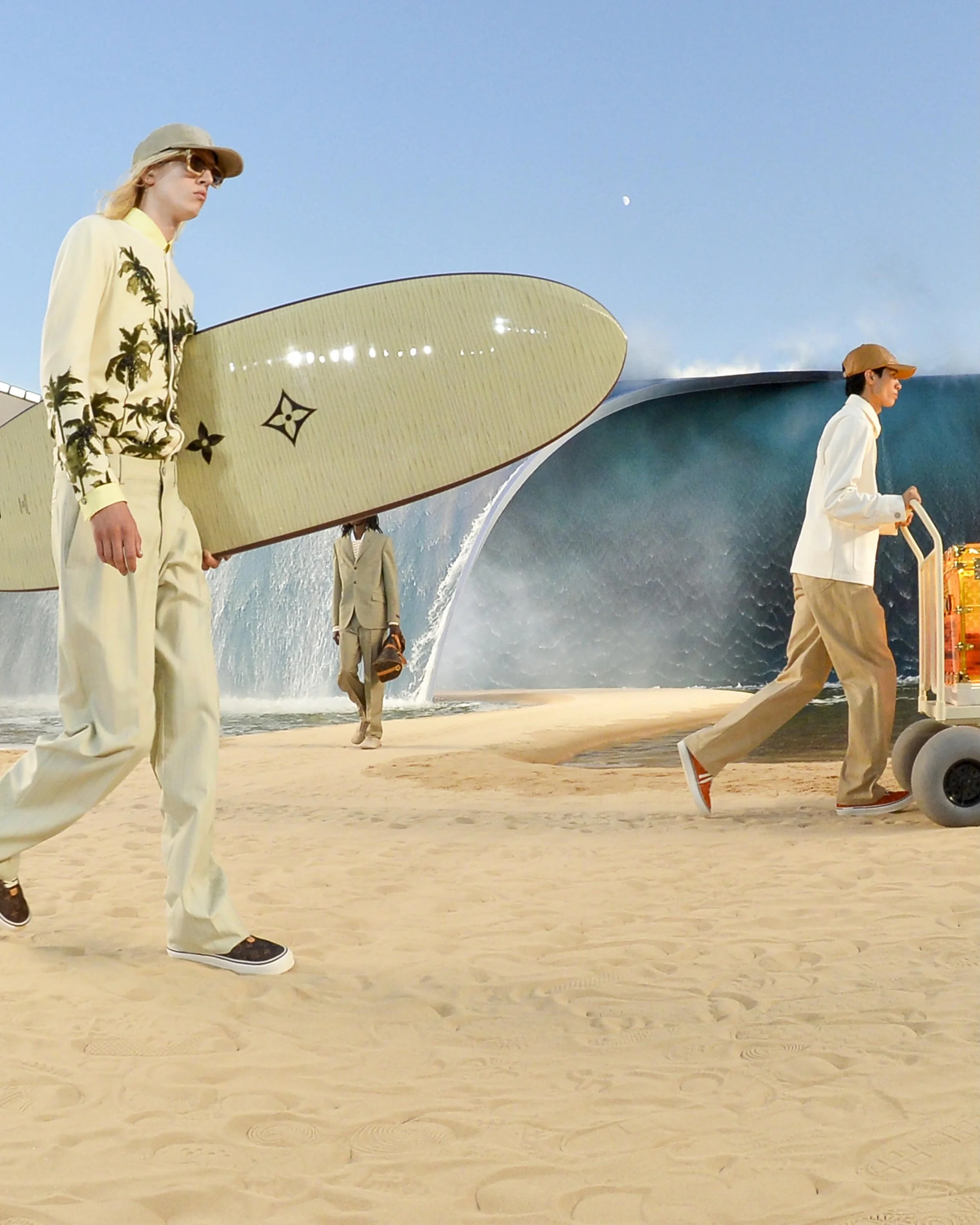
The runway featured full-sized Louis Vuitton surfboards. Models wore monogrammed wetsuits alongside tailored pieces and relaxed shorts.
At first glance, it would be easy to describe the collection as surf-inspired. But Louis Vuitton described it differently.
The brand referred to surfing as “a worldwide way of life” and the sea as “a space of universal human belonging.” That’s a subtle but important distinction.
Instead of borrowing the visuals of surf culture, Louis Vuitton adopted the beliefs behind it.
Freedom.
Exploration.
Movement.
Connection.
The surfboards weren’t props. They were symbols supporting a much bigger idea.
The strongest brands rarely build campaigns around products alone. They build them around beliefs.
Every Detail Told the Same Story
One of the easiest ways to spot strong branding is consistency.
Not consistency in colours or fonts. Consistency in feeling.
Nothing inside Louis Vuitton’s show existed by accident.
The wave wasn’t simply there for spectacle. The water came from Paris’s municipal supply before being returned to the city’s system afterwards. The sand was repurposed for university volleyball courts. Even the seating was reused from a previous season.
None of those decisions were the headline.
But together, they reinforced the same message the collection was already communicating: intentional design, thoughtful craftsmanship, and respect for materials.
This is where many brands fall short.
They obsess over finding one brilliant campaign idea while overlooking the dozens of smaller decisions that shape how people experience the brand.
Brand perception isn’t created by one moment.
It’s built through accumulation.
Why This Matters for Every Brand
You don’t need Louis Vuitton’s budget to apply this thinking.
Whether you’re launching a product, opening a retail space, designing a website, or creating content for social media, the same principle applies. Ask yourself:
What feeling are we trying to create?
Then ask a second question that’s even more important.
Does every touchpoint reinforce that feeling?
Your visuals.
Your copy.
Your customer experience.
Your packaging.
Your partnerships.
Your events.
Your product design.
Each one should point in the same direction because customers rarely remember individual features. They remember how your brand made them feel.
The Brands People Remember Build Worlds, Not Campaigns
Many businesses chase memorable marketing moments.
A viral video.
A celebrity collaboration.
A clever campaign.
Those things can generate attention but attention fades quickly if it isn’t supported by something deeper.
Louis Vuitton’s runway wasn’t memorable because it featured surfboards. It was memorable because every single element—sand, water, mist, clothing, language, materials, sustainability, and staging—worked together to create one cohesive experience.
Nothing competed for attention. Everything reinforced the same story.
That’s what turns a campaign into a brand.
The Takeaway
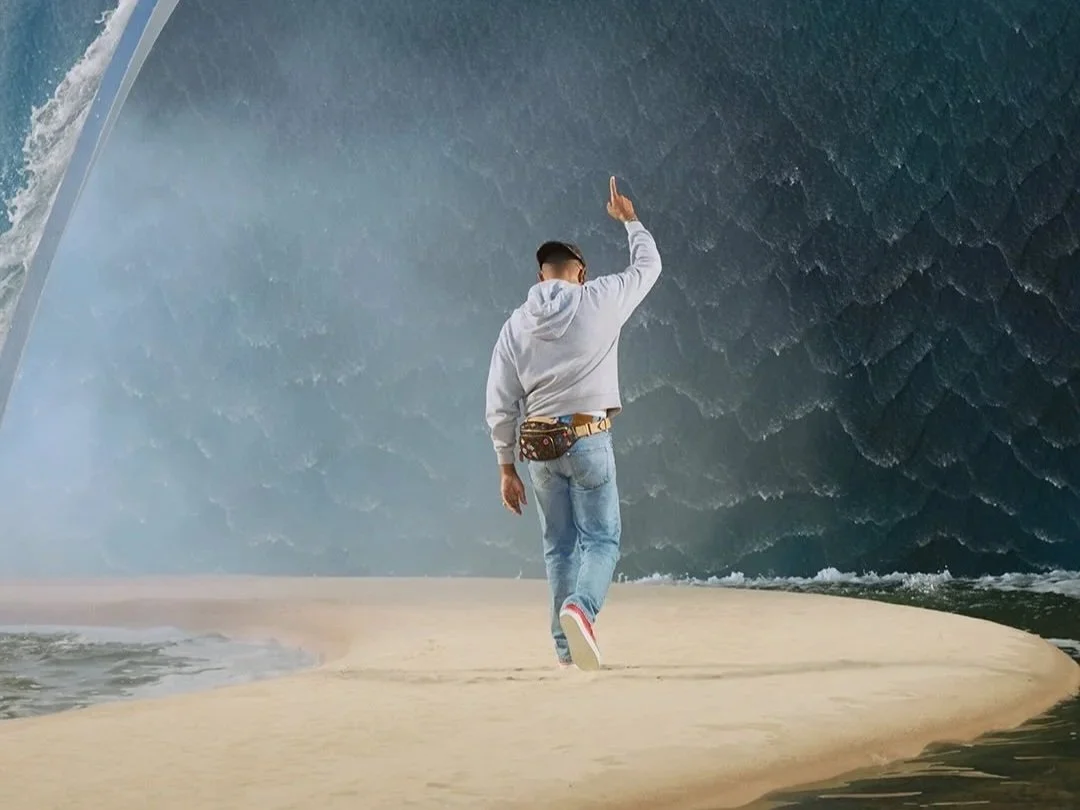
The lesson isn’t that every brand should build an eight-metre wave or put surfboards on a runway. The lesson is that great branding isn’t about one big idea. It’s about hundreds of intentional decisions that all reinforce the same belief.
When every touchpoint points in the same direction, people don’t just notice your brand. They feel it.
And that’s what they remember.
