

Rhode didn’t just launch in Australia — it engineered a cultural moment
Rhode didn’t just arrive in Australia. It has managed to embed itself into the culture from day one, writes Jessica Robinson.
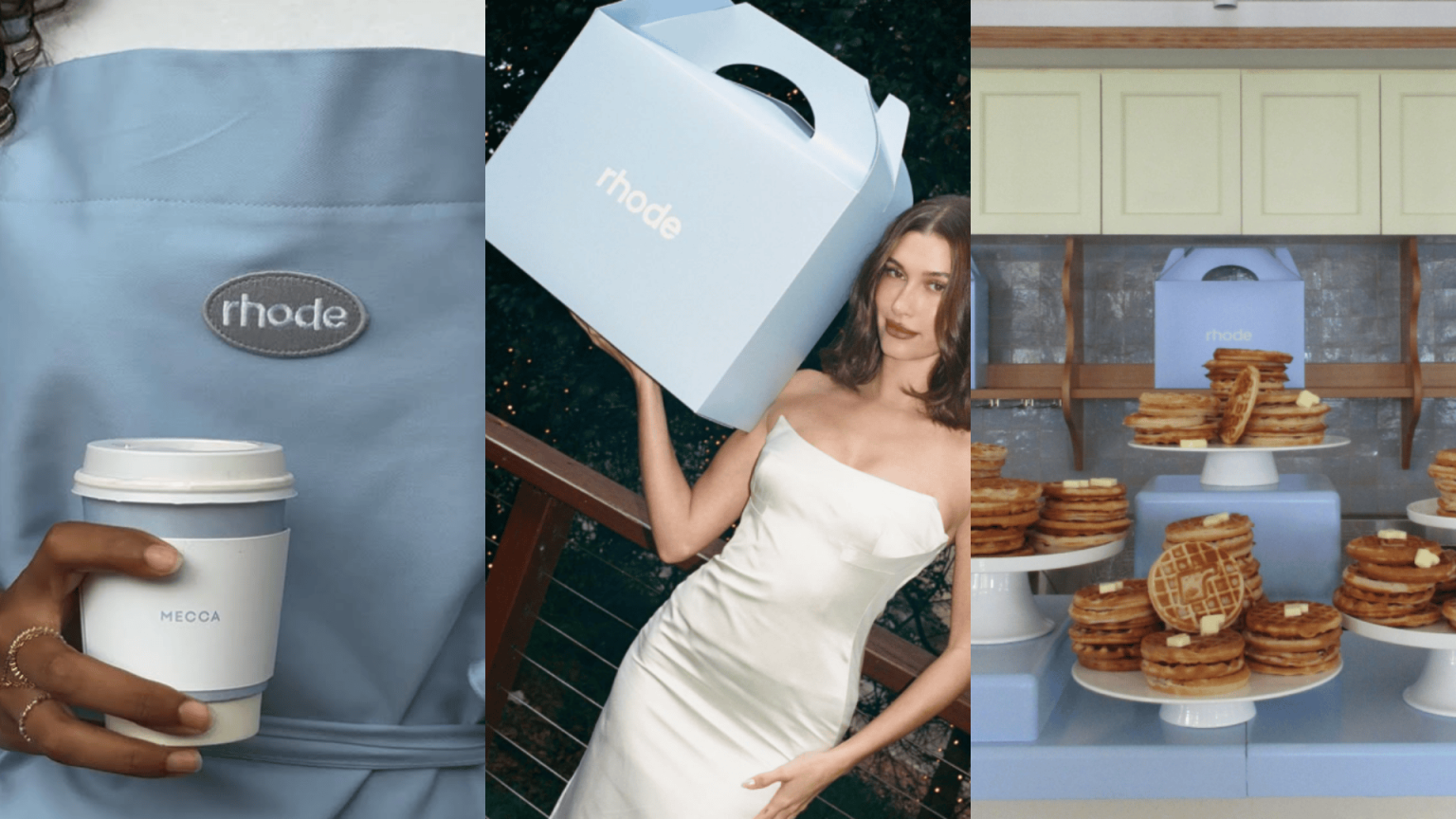
Source: Instagram.com/Rhode
As someone who’s obsessed with brand and market entry strategy, the arrival of Hailey Bieber’s beauty brand Rhode in Australia stood out.
Rhode didn’t just “expand internationally.” It understood the Australian consumer, and that starts with clarity. It partnered with Mecca, a retailer that already owns deep cultural relevance in the local beauty space, and supported the launch with a local, on-the-ground agency. That combination matters.
Entering a new market isn’t about copying what worked elsewhere. Cultural nuance is everything. What resonates in the US won’t automatically resonate in Australia.
Then came the activations.
A fully Rhode-branded pop-up bakery, complete with signature pastries and a stamp that unlocked a product sample from Mecca. The product hasn’t been easily accessible in Australia, so this created hype, trial and retail alignment all at once. And the beachfront launch event was a masterclass in location strategy, distinctly Australian and effortlessly on brand.
But what really caught my eye was the oversized PR gift bags.
Clean. Aesthetic. Understated. Not screaming for attention, yet impossible to ignore. Every photo from the event featured one. It became the hero prop without looking like one. That’s intentional brand engineering.
Rhode’s masterclass in modern brand building
What Rhode demonstrated, and what many brands overlook when entering a new market, is this. Distribution alone is not a strategy. Access is transactional. Brand embedding is emotional.
By choosing a non-exclusive partnership with Mecca, Rhode maintained brand control while leveraging an established retail ecosystem. That balance is powerful. It protects long-term equity while accelerating short-term reach. Too many brands rush expansion through aggressive wholesale strategies without considering how perception will translate locally.
The bakery activation wasn’t just aesthetically pleasing; it was strategic sensory marketing. Food creates memory. Physical stamps create interaction. Samples create conversion. Every touchpoint moved the consumer one step deeper into the brand world. That’s considered funnel design disguised as culture.
The oversized gift bags were more than PR collateral. They were scalable user-generated content assets. Designed to photograph beautifully, they turned every attendee into a distribution channel.
This is what modern brand building looks like. Clarity of consumer, intentional partnerships, immersive activations, and engineered shareability. Market entry is not about being present. It’s about being remembered.
Rhode didn’t just arrive in Australia. It embedded itself into the culture from day one. That’s how you enter a market.
